The Science of Choosing the Right Photo for Your Donation Form

Most nonprofits choose their donation form photos the same way: someone on the team picks an image that “looks nice” from a recent event or photo shoot, uploads it, and moves on. It’s a gut decision made in five minutes that can cost thousands in lost donations.
The photo on your donation form is arguably the single most important design element on the page. It’s the last emotional touchpoint before a donor commits. And there is a surprising amount of peer-reviewed research on exactly what makes a charitable image effective.
This isn’t about aesthetics. It’s about psychology. Let’s walk through what the science says.
One Face Beats a Thousand Statistics
The most robust finding in charitable giving research is what psychologists call the identifiable victim effect. In a landmark series of experiments, a study showed that when people were given the opportunity to donate to help a single, named child—a seven-year-old girl from Mali named Rokia—they gave significantly more than when presented with statistical information about millions affected by famine.1
This wasn’t a small difference. And perhaps more strikingly, when the researchers showed Rokia’s story alongside the statistics, donations actually dropped compared to Rokia’s story alone. The analytical framing appeared to suppress the emotional response that drives giving.2
Compassion begins to fade at two. In one study, donors gave less to help two named children than to help just one.
Västfjäll, Peters & Slovic (2014), PLOS ONE
Paul Slovic’s subsequent work on what he calls “psychic numbing” revealed something even more unsettling: our emotional response doesn’t just plateau as numbers increase—it actually begins to decline with as few as two people. Donors in one experiment gave less to help two starving children than to help a single child.3
The implication for your donation form is clear: show one person, not a group.

A single identifiable individual triggers a stronger emotional response and greater willingness to donate. The donor can imagine the specific impact of their gift.

Group photos, crowd shots, and event photography shift the frame from personal to institutional. The emotional connection is diffused and weakened.
The Expression That Drives Donations
Once you’ve committed to a single subject, the next question is: what should they look like?
Small and Verrochi (2009) published a key study in the Journal of Marketing Research testing exactly this. They showed participants charity advertisements featuring children with either sad, happy, or neutral facial expressions. Participants who saw the sad expression gave the most. The researchers found that viewers literally “caught” the emotion on the subject’s face through a process called emotional contagion—they felt sadder themselves, which in turn generated sympathy and increased their willingness to donate.4
But here’s where it gets nuanced. More recent research by Homer (2021) found that appeals combining sadness and hope outperformed appeals that were purely sad or purely hopeful. The ideal image evokes sympathy (through visible need) and inspiration (through a sense that change is possible). Appeals that transitioned from sadness to hopefulness generated the highest donation amounts.5
There’s also an important cautionary finding: Choi and Park (2021) showed that overly sad appeals can backfire by triggering donors’ “persuasion knowledge”—their awareness that they’re being emotionally manipulated. When that alarm goes off, skepticism rises and donations fall. Importantly, this effect was neutralized when the charity had a strong, credible reputation.6
Eye Contact, Proximity, and the Brain
The neuroscience adds another layer. Genevsky et al. (2013) used fMRI brain scanning to study what happens when people view charitable appeals. They found that photographs of orphans (versus anonymous silhouettes) activated both facial processing circuits and the nucleus accumbens—a brain region associated with positive anticipatory feeling. Critically, it was the nucleus accumbens activation that predicted actual donation decisions.7
This tells us something important about composition. The donor needs to see the face clearly enough for their brain’s facial processing system to engage. That means close framing, clear visibility of the eyes, and minimal visual clutter competing for attention.

Direct eye contact creates personal connection. Close framing makes the subject feel present. Blurred background eliminates distraction and keeps attention on the face.

Images without a visible human face fail to activate the neural circuits that drive empathic giving. Institutional imagery shifts the donor into analytical mode.
Authenticity Over Polish
There’s one more factor that research has illuminated: tangibility. Cryder, Loewenstein, and Scheines (2013) found that tangible, concrete details about both the victim and the charity’s specific interventions increased donations—and that this effect was mediated by perceived impact, not just sympathy.8
This has a direct implication for photo selection. Generic stock photography—no matter how technically polished—lacks the tangible specificity that makes donors feel their contribution will have a concrete effect. An authentic photo of a real person your organization serves, even if it’s slightly less “professional” than stock, will almost always outperform it.
The donor is making a trust decision at the moment they enter their credit card number. The photo should reinforce that trust by communicating: this is real, this person is real, and your money will reach them.
The Congruence Factor
Chang and Lee (2009) demonstrated that when the emotional valence of an image and the message copy are congruent—especially when both lean toward communicating urgency and need—advertising effectiveness improves significantly. When image and text point in different emotional directions, the resulting cognitive friction undermines the appeal.9
In practice, this means the photo on your donation form should directly relate to the specific campaign or cause being funded. If you’re raising money for clean water, show someone at a well or water source—not a generically emotional image that has nothing to do with water. The visual and the verbal story need to match.
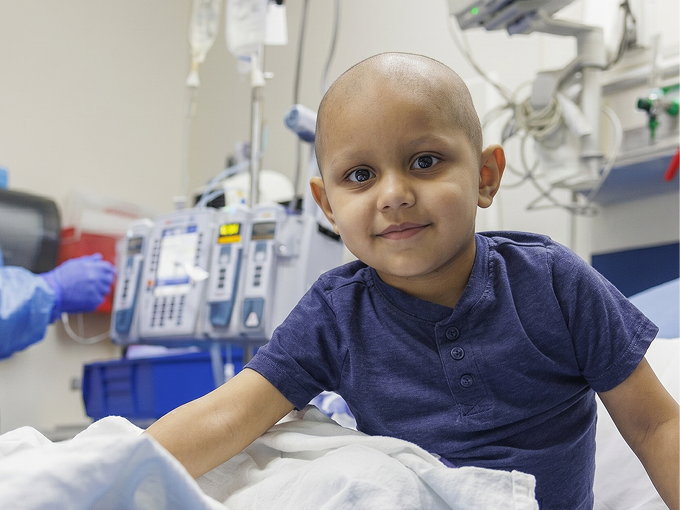
When the photo directly illustrates the campaign’s mission, the visual and verbal story reinforce each other, creating a coherent emotional narrative.

When the photo doesn’t match the ask, donors experience cognitive friction. The disconnect between what they see and what they read suppresses action.
Half the Screen, by Design
Charitable giving is, at its core, an emotional decision dressed up as a logical one. Donors will tell you they gave because the cause is important or because the organization is well-run. While those things may be true, they're rarely what triggered the action. The trigger is almost always affective: a flash of empathy, a moment of identification, a feeling that something in the world is wrong and they can help make it right. The logic comes afterwards; to justify a decision the donor has already made.
The research on this is clear. In the same Small, Loewenstein, and Slovic study cited earlier, the researchers found that simply asking participants to "think carefully" before deciding whether to donate — priming them into analytical mode — caused donations to drop significantly. Deliberation suppressed empathy. The participants who gave the most were the ones who responded with their hearts, without overthinking it.
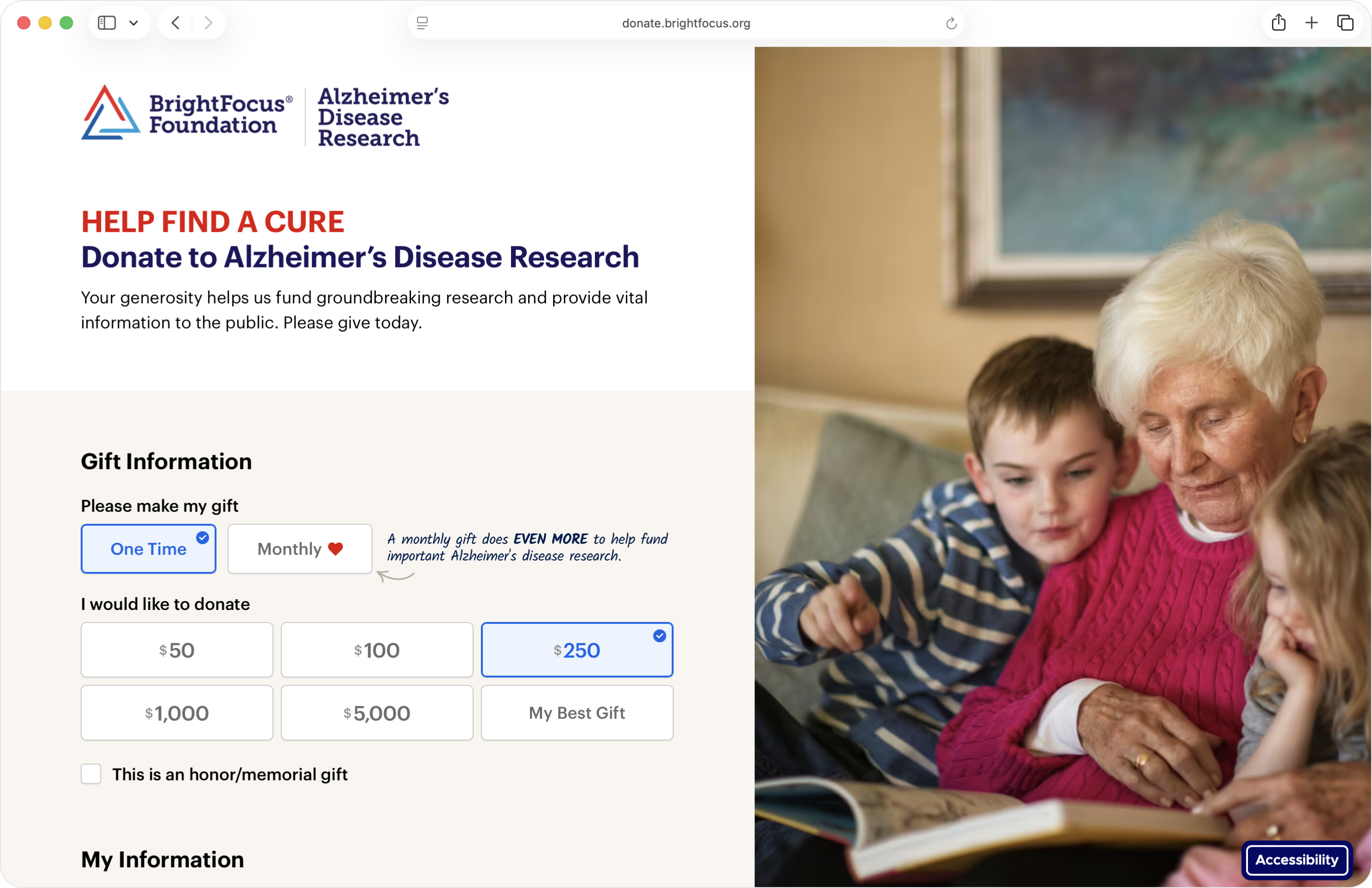
That's why the GiveForms donation page reserves the entire right half of the desktop screen for a photo. The first thing a donor sees isn't a form. It's an image at a scale large enough to land before any other cognitive process kicks in. The emotional response arrives first. The form fields, the suggested amounts, the payment selector — all of that comes second, as the means by which the donor acts on a feeling they're already having.
The Bottom Line
The photo on your donation form isn’t decoration. It’s the emotional engine of your conversion rate. Decades of research—from behavioral psychology to neuroscience to marketing science—converge on the same core insight: humans are wired to respond to a single, identifiable face expressing dignified need.
The formula is remarkably consistent across studies: one person, eye contact, warm tones, authentic (not stock), moderate emotion with hope, and tight alignment between the image and the campaign story.
Apply these principles and you’re not guessing anymore. You’re designing with evidence.
References
- Small, D. A., Loewenstein, G., & Slovic, P. (2007). Sympathy and callousness: The impact of deliberative thought on donations to identifiable and statistical victims. Organizational Behavior and Human Decision Processes, 102(2), 143–153.
- Slovic, P. (2007). “If I look at the mass I will never act”: Psychic numbing and genocide. Judgment and Decision Making, 2(2), 79–95.
- Västfjäll, D., Peters, E., & Slovic, P. (2014). Compassion fade: Affect and charity are greatest for a single child in need. PLOS ONE, 9(6), e100115.
- Small, D. A., & Verrochi, N. M. (2009). The face of need: Facial emotion expression on charity advertisements. Journal of Marketing Research, 46(6), 777–787.
- Homer, P. M. (2021). When sadness and hope work to motivate charitable giving. Journal of Business Research, 133, 162–173.
- Choi, J., & Park, H. Y. (2021). How donor’s regulatory focus changes the effectiveness of a sadness-evoking charity appeal. International Journal of Research in Marketing, 38(3), 749–769.
- Genevsky, A., Västfjäll, D., Slovic, P., & Knutson, B. (2013). Neural underpinnings of the identifiable victim effect: Affect shifts preferences for giving. Journal of Neuroscience, 33(43), 17188–17196.
- Cryder, C. E., Loewenstein, G., & Scheines, R. (2013). The donor is in the details. Organizational Behavior and Human Decision Processes, 120(1), 15–23.
- Chang, C. T., & Lee, Y. K. (2009). Framing charity advertising: Influences of message framing, image valence, and temporal framing on a charitable appeal. Journal of Applied Social Psychology, 39(12), 2910–2935.
- Erlandsson, A., Nilsson, A., & Västfjäll, D. (2018). Attitudes and donation behavior when reading positive and negative charity appeals. Journal of Nonprofit & Public Sector Marketing, 30(4), 444–474.
- Kogut, T., & Ritov, I. (2005). The “identified victim” effect: An identified group, or just a single individual? Journal of Behavioral Decision Making, 18(3), 157–167.